
🧠 Santé mentale et IA, retour sur une rencontre passionnante 🤖
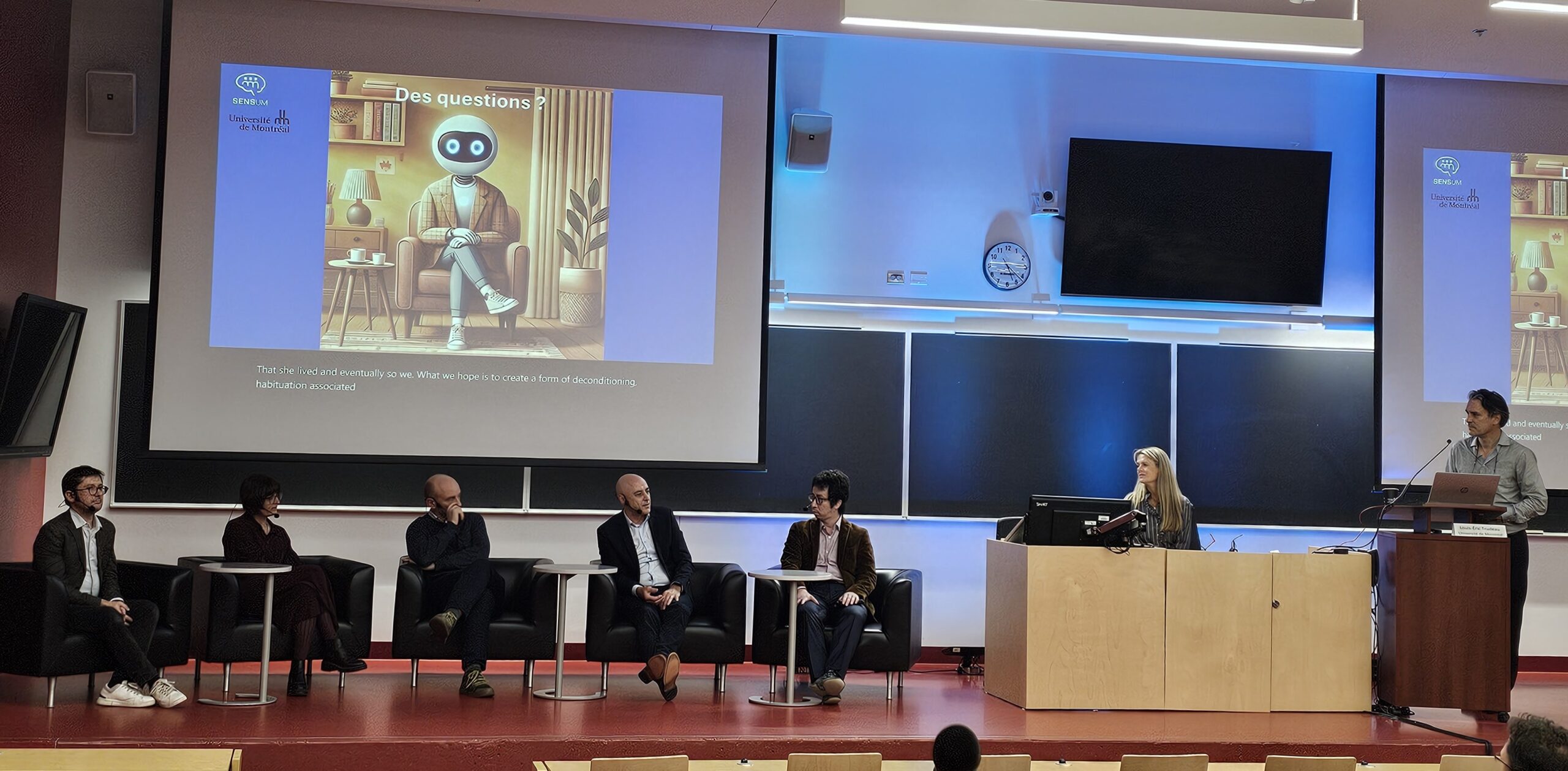
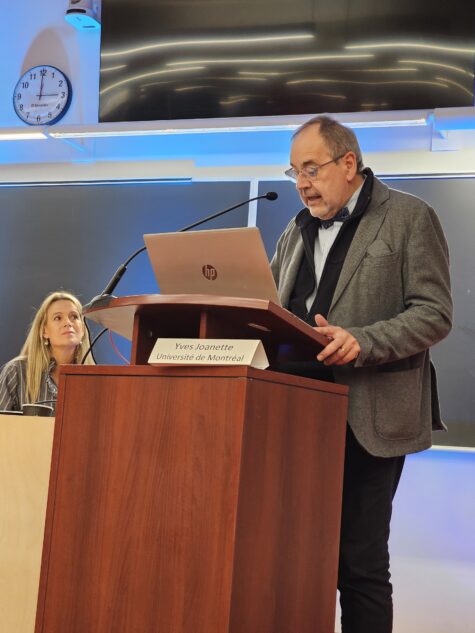
On October 10, 2024, to mark World Mental Health Day, SENSUM hosted the second edition of its annual Santé-en-tête conference, bringing together experts and the public to explore the question: “Mental Health and AI: Could Machines Replace Our Therapists?”. This event shed light on the challenges and opportunities that artificial intelligence (AI) offers in the field of mental health.
Prominent researchers from the University of Montreal, including Guillaume Dumas, Stéphane Guay, and Tania Lecomte, alongside IBM Research scientists Guillermo Cecchi and Bo Wen, shared their perspectives. They discussed the potential and limitations of conversational agents in mental health:
Guillaume Dumas introduced the concept of Neuro-AI through three key pillars:
He also emphasized challenges, including system interoperability, talent retention, and acceptance of AI tools in clinical settings.
Guillermo Cecchi and Bo Wen presented a brain-inspired chatbot designed to interact via phone without requiring new devices for patients. This system blends standardized medical questionnaires with natural conversations to boost engagement by adapting to users’ language. The goal is to achieve human-level accuracy while reducing comprehension errors.
Tania Lecomte highlighted how new technologies can enhance traditional treatments by:
Stéphane Guay stressed the importance of conversational agents in complementing traditional care. These tools can offer timely support for those waiting for treatment, helping to alleviate the burden on mental health services, especially during staff shortages. He also emphasized their potential to reduce stigma by providing anonymous and easily accessible options.
The overarching conclusion was clear: AI will not replace human therapists, but it paves the way for a hybrid model in mental health care. Digital tools can improve access to care and follow-up, but human intervention remains indispensable for complex cases. The future of care depends on close collaboration between health professionals and AI tools to deliver personalized, effective support.
This insightful event opened new perspectives on the future of mental health care, where AI and human expertise work hand in hand to improve patient outcomes.
🔹 Watch the full conference here: Watch on YouTube


This content has been updated on 21 November 2024 at 13 h 24 min.
Comments